Lathe tool are indispensable in machining operations, directly influencing precision, surface finish, and productivity.
Selecting the right tool involves understanding material properties, workpiece requirements, and machining conditions.
This article explores the types of lathe tools, material considerations, selection criteria, and best practices to optimize
performance in turning operations.
Types of Lathe Tools
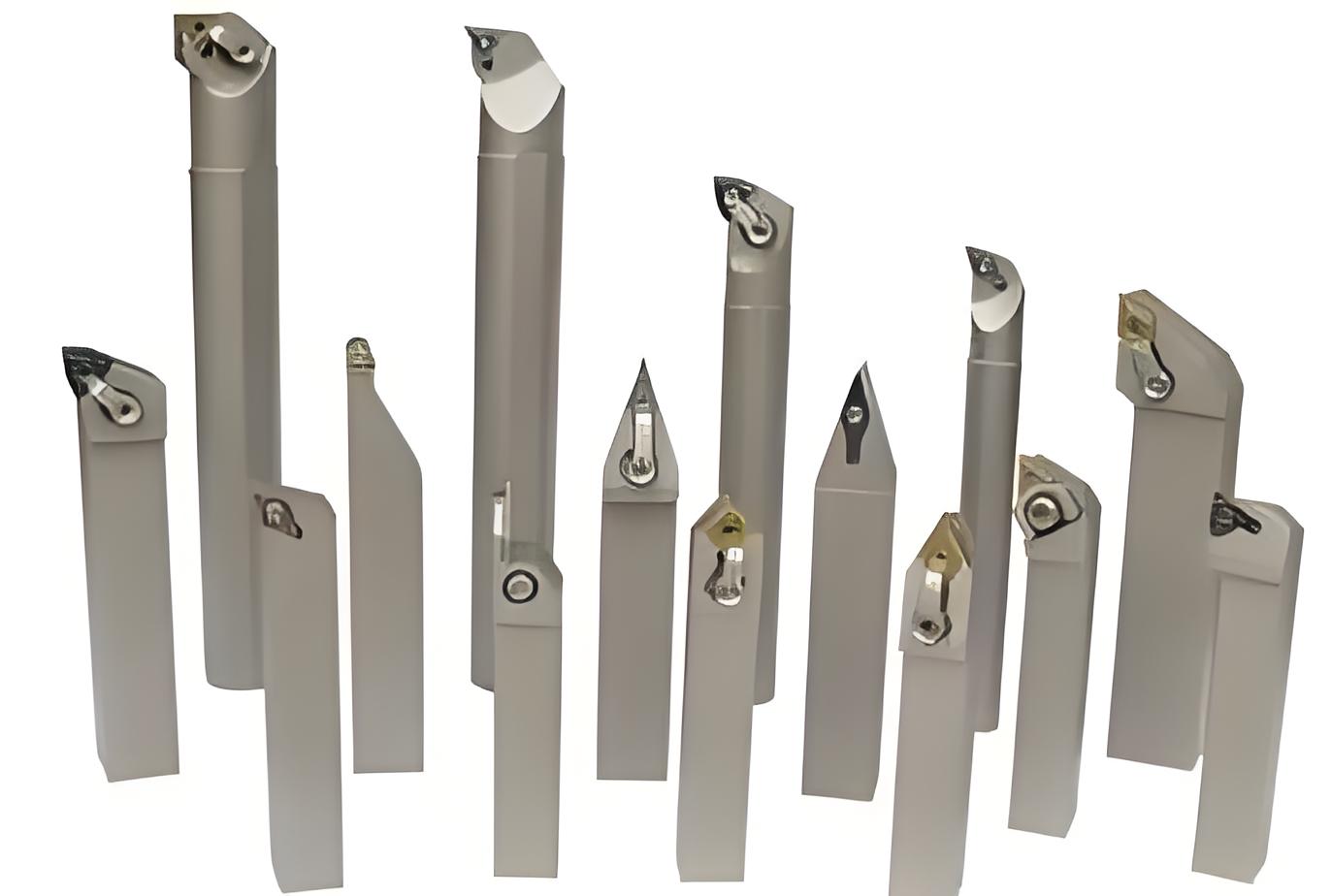
Lathe tools are categorized based on their geometry and application:
1. External Turning Tools
- Roughing Tools**: Designed for heavy material removal with robust edges (e.g., CCMT/CNMG inserts).
- Finishing Tools**: Feature sharp edges and fine geometries for high surface quality (e.g., VBMT/DCMT inserts).
2. Internal Turning Tools (Boring Bars)
- Used for enlarging holes or machining internal diameters. Rigidity is critical to avoid chatter.
3. Parting and Grooving Tools
- Narrow inserts for cutting off workpieces or creating grooves (e.g., GTN/GROOVE inserts).
4. Threading Tools
- Ground to specific thread profiles (e.g., 60° for metric threads). Carbide inserts with specialized coatings are common.
5. Form Tools
- Custom-shaped tools for creating complex profiles, often used in mass production.
Tool Materials and Coatings
Material selection depends on workpiece hardness, cutting speed, and cost efficiency:
1. High-Speed Steel (HSS)
- Affordable with good toughness, suitable for low-speed operations and intermittent cuts. Loses hardness above
300°C.
2. Cemented Carbide
- Dominates modern machining due to high hardness (up to 92 HRA) and wear resistance. Ideal for steels, stainless
steel, and cast iron. Brands like Zhuzhou Diamond (China) rival Japanese/Korean counterparts in cost-performance.
3. Ceramics
- Excellent for high-speed machining of hardened steels (45–65 HRC) and superalloys. Silicon nitride tools withstand
temperatures up to 1200°C.
4. Polycrystalline Diamond (PCD) and Cubic Boron Nitride (CBN)
- PCD for non-ferrous materials; CBN for hardened steels. Superior wear resistance but brittle.
5. Coatings
- TiN, TiAlN, or AlCrN coatings enhance tool life by reducing friction and thermal degradation. Domestic Chinese
coatings still lag behind European technologies.
Factors Influencing Tool Selection
1. Workpiece Material
- Soft Materials (Aluminum, Brass)**: Use sharp, polished carbide or PCD tools to prevent built-up edge.
- Hard Materials (Titanium, Inconel)**: Opt for ceramic or CBN tools with high thermal stability.
2. Machining Stage
- Roughing: Prioritize strength and chip-breaking geometries (e.g., CNMG inserts).
- Finishing: Focus on edge sharpness and surface finish (e.g., DCGT inserts).
3. Machine Compatibility
- CNC lathes favor indexable inserts for rapid tool changes, while manual lathes may use HSS bits.
4. Cost Efficiency
- Domestic Chinese brands (e.g., Xiamen Jinlu) offer tools at 60% of Japanese/Korean prices with comparable
performance.
Best Practices for Tool Selection
1. Prioritize Coated Tools
- Coatings like TiAlN extend tool life by 200% in high-temperature applications.
2. Match Tool Geometry to Operations
- Use positive rake angles for soft materials, negative angles for hard materials.
3. Leverage Toolholding Systems
- Hydraulic or shrink-fit chucks enhance stability, critical for high-precision boring.
4. Monitor Wear and Replace Proactively
- Flank wear >0.3 mm or cratering indicates tool failure. Use predictive maintenance systems.
5. **Balance Cost and Performance**
- For general-purpose turning, Chinese carbide inserts (e.g., Ouke or Huawei Precision) provide excellent value.
Case Study: Machining Stainless Steel (SS304)
Workpiece: SS304 shaft, diameter 50 mm, requiring roughing and finishing.
1. Roughing: CNMG 120408 carbide insert (coated with TiAlN) at 250 m/min, feed 0.3 mm/rev.
2. Finishing: DCGT 11T302 insert with sharp edge at 300 m/min, feed 0.1 mm/rev.
Result: Surface roughness Ra 0.8 μm achieved, tool life extended by 30% compared to uncoated tools.
Selecting the right lathe tool requires a holistic approach, balancing material properties, operational demands, and
economic factors. With advancements in domestic tooling (e.g., Zhuzhou Diamond’s carbide tools), manufacturers
can achieve high precision without relying on imported brands. Future trends will focus on smart tooling systems
integrated with IoT for real-time wear monitoring, further optimizing machining efficiency.
For deeper insights, consult FANUC operator manuals or explore tooling catalogs from leading brands like Sandvik
and Iscar.