What is a Lathe?
A lathe is a fundamental machine tool used in manufacturing and woodworking to shape materials such as metal, wood,
or plastic by rotating the workpiece against a cutting tool. Its primary function is to remove excess material to
create symmetrical, cylindrical, or conical objects. Lathes are essential in producing parts like shafts, screws, bowls,
or decorative designs with precision.
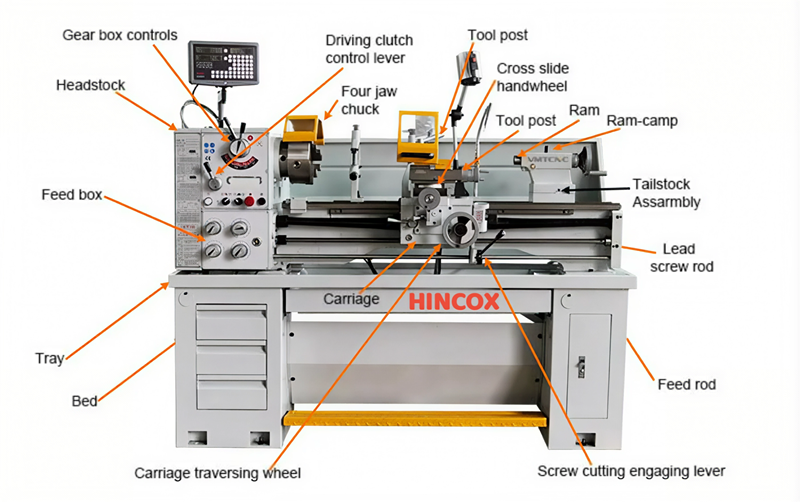
A typical lathe consists of several key components: the bed(a sturdy base), the headstock (which holds the
rotating spindle and motor), the tailstock(providing support for long workpieces), the carriage (moving the
cutting tool along the bed), and the tool post (securing the cutting tool). The workpiece is clamped between the
headstock and tailstock or attached to a faceplate, then rotated at high speed. As it spins, the cutting tool is carefully
maneuvered to shave, drill, groove, or polish the material into the desired shape.Here is a lathe machine diagram show
the key components:
lathe machine diagram:
Lathes date back to ancient civilizations, with early versions powered by hand or foot pedals. Today, modern lathes
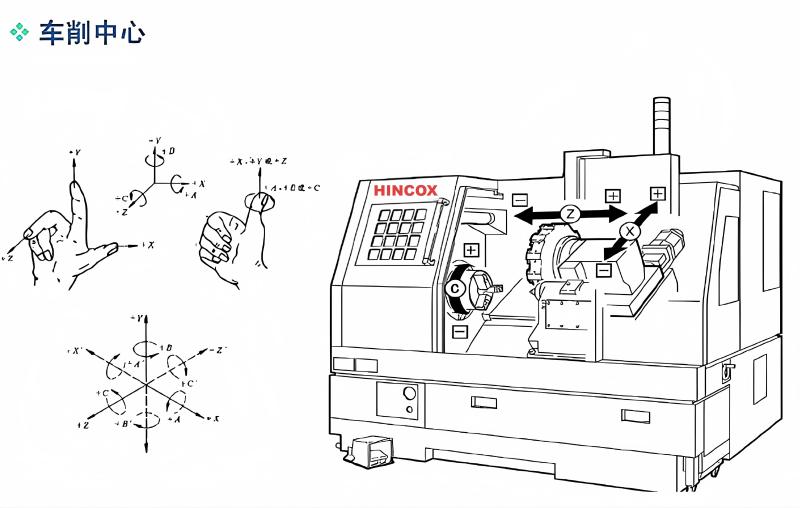
are computer-controlled (CNC lathes), enabling automated, highly accurate, and repeatable operations. They are
widely used in industries such as automotive, aerospace, and furniture-making. From crafting intricate wooden art
to machining engine components, the lathe remains a cornerstone of fabrication, embodying the blend of
craftsmanship and technological innovation.
The performance and capabilities of a lathe are defined by several critical specifications of lathe
machine, which determine its suitability for specific tasks. Here are the most important ones:
1. Swing Over Bed
- The maximum diameter of a workpiece that can rotate over the lathe bed. For example, a "12-inch swing" means
a 12-inch-diameter workpiece can fit.
2. Distance Between Centers
- The maximum length of a workpiece that can be mounted between the headstock and tailstock (e.g., 24 inches).
3. Spindle Speed Range
- The rotational speed of the spindle, measured in revolutions per minute (RPM). Modern lathes often have variable
speed control (e.g., 50–2500 RPM).
4. Spindle Bore Diameter
- The hole diameter through the spindle, determining the maximum bar stock size that can pass through
(e.g., 1.5 inches).
5. Motor Power
- The horsepower (HP) or kilowatt (kW) rating of the drive motor, indicating cutting capacity (e.g., 5 HP or 3.7 kW).
6. Bed Construction and Guideways
- The material (cast iron, hardened steel) and type of guideways (flat, V-shaped, or box-type) affect rigidity, precision,
and durability.
7. Cnc Chuck Size and Type
- The diameter of the chuck (e.g., 6-inch) and its design (3-jaw, 4-jaw, or collet chuck) determine gripping capacity and
versatility.
8.Feed Rate and Thread Cutting Range
- The range of longitudinal/cross feeds (e.g., 0.001–0.1 inches per revolution) and thread pitches (metric/imperial) the
lathe can produce.
9. Repeatability and Accuracy
- Critical for CNC lathes, measured in microns or thousandths of an inch (e.g., ±0.0002 inches).
10. Control System (for CNC Lathes)
- Type of CNC controller (e.g., Fanuc, Siemens), number of axes (2-axis, multi-axis), and programming capabilities.
11. Tool Turret Capacity
- The number of cutting tools a CNC lathe’s turret can hold (e.g., 8 or 12 stations).
12. Coolant System
- Presence of flood coolant or mist cooling to manage heat and improve tool life.
13. Weight and Footprint
- Overall machine weight and dimensions, which influence stability and workspace requirements.
These parameters help users select a lathe that aligns with their material type, workpiece size, precision needs, and
production scale. For instance, heavy-duty metalworking lathes prioritize high motor power and rigidity, while
hobbyist wood lathes focus on simplicity and variable speed ranges.