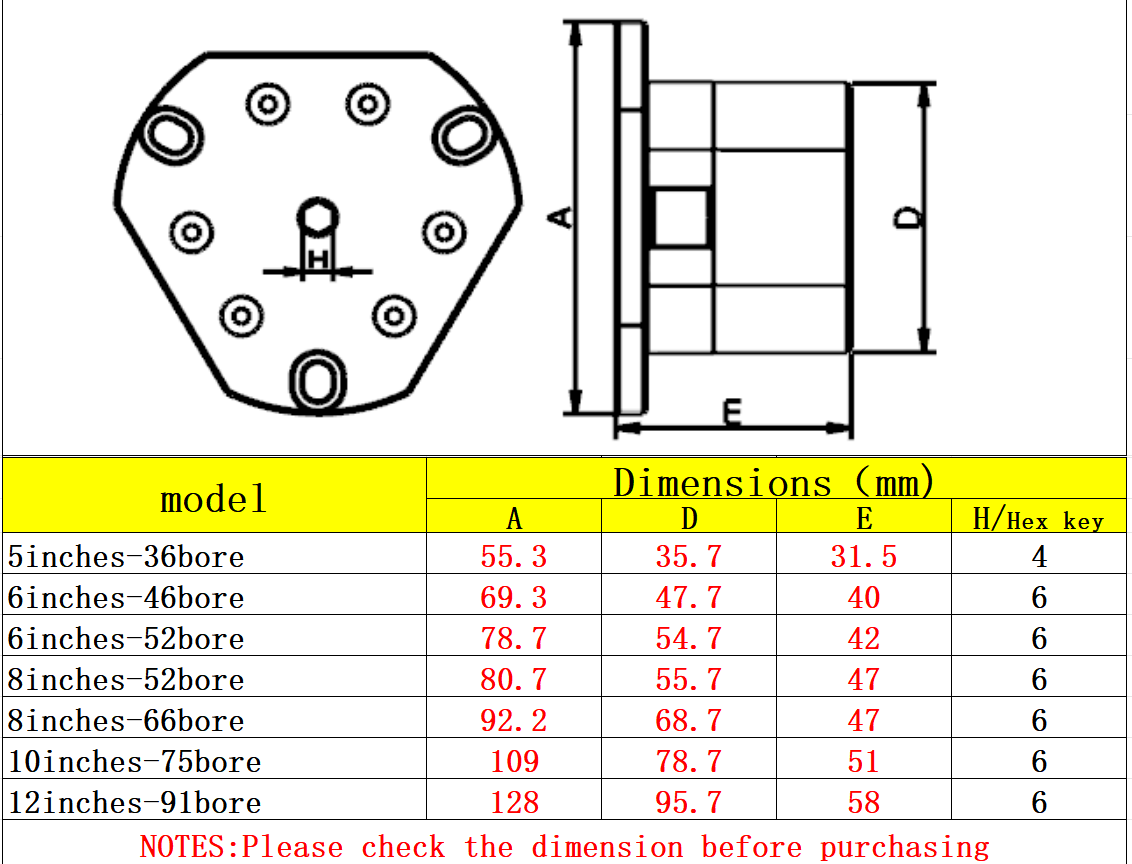
The heart of any CNC lathe operation lies in securely holding the workpiece. The chuck, responsible for this critical task,
comes in various types, each with distinct advantages and limitations. Choosing the optimal chuck is not a
one-size-fits-all decision; it significantly impacts machining efficiency, precision, setup time, and overall
cost-effectiveness
Here is a guide to navigating the key chuck options for CNC turning:
1. The Workhorse: The 3-Jaw Power Chuck
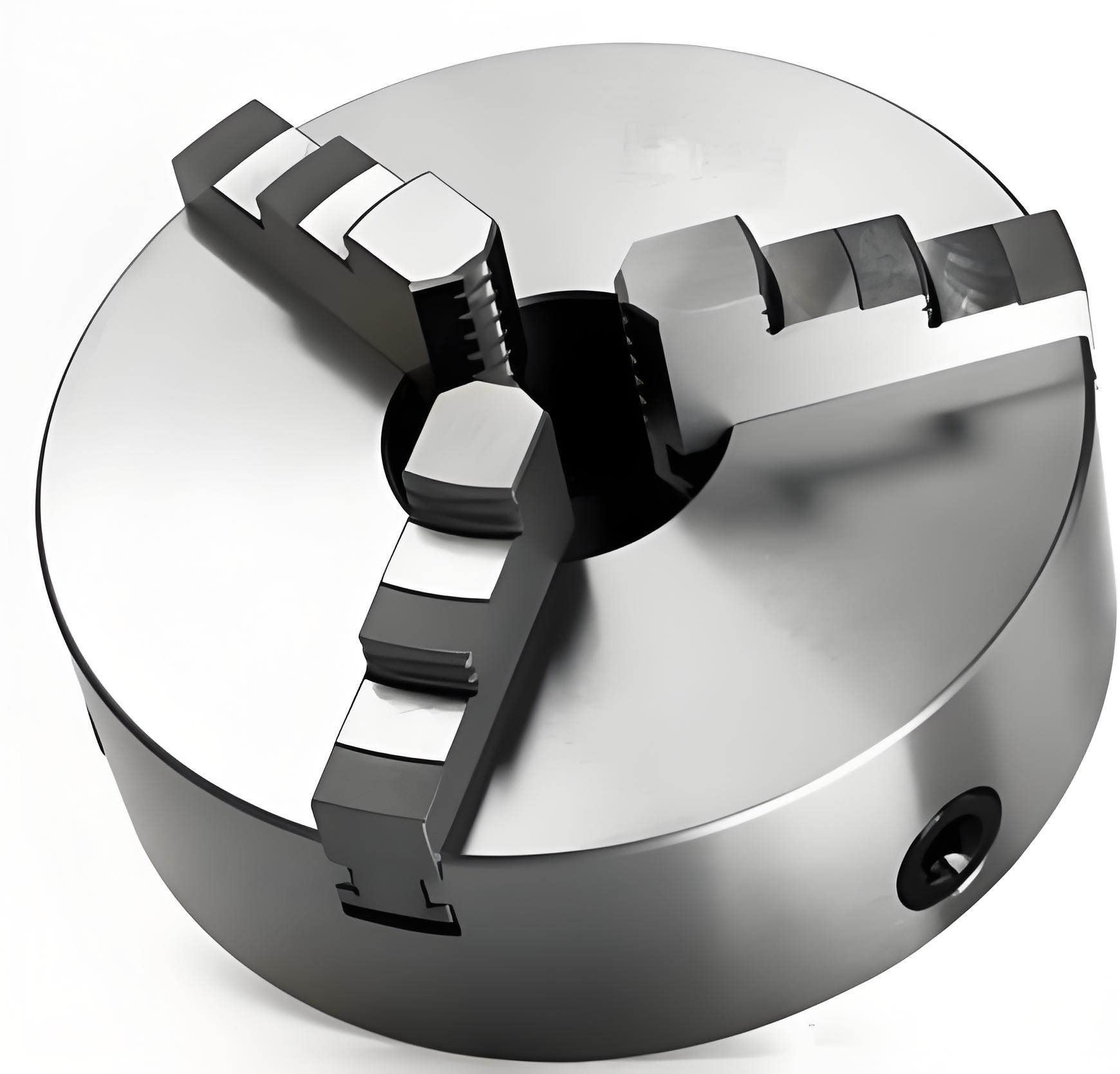
Mechanism: Three jaws move simultaneously and concentrically via a scroll mechanism, powered hydraulically or
pneumatically.
Strengths:
Speed: Extremely fast setup for round or hexagonal stock. Ideal for high-volume production of symmetrical
parts.
Automatic Centering:Provides good concentricity "out of the box" for standard stock.
Versatility:Soft jaws can be machined (bored) to grip complex or non-standard shapes.
Limitations:
Limited Runout Adjustment: Inherent runout is fixed by the scroll; precise adjustment per jaw is difficult.
Grip Force Variation: Grip force can vary slightly between jaws, potentially affecting very high-precision work.
Non-Symmetrical Parts: Not suitable for holding square, rectangular, or highly irregular shapes without custom softjaws.
Best For:High-volume production of round/hex parts, general machining where moderate concentricity suffices, jobs
benefiting from rapid changeovers.
2. The Precision Specialist: The Collet Chuck
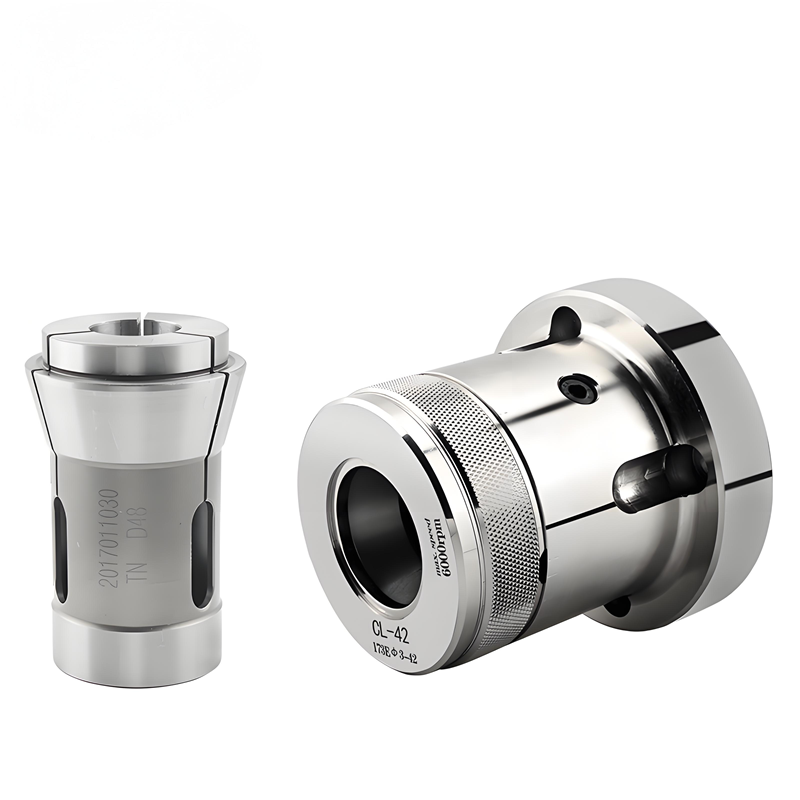
Mechanism:Utilizes a segmented, elastic sleeve (collet) that contracts uniformly around the workpiece when drawn into
a tapered closing sleeve by the chuck body.
Strengths:
Exceptional Accuracy & Repeatability:Offers minimal runout (often < 0.0005 inches / 0.013 mm), crucial for
high-tolerance machining.
Superior Grip:** Uniform pressure distribution minimizes workpiece distortion, ideal for thin-walled tubing or
delicate parts.
Fast Change (with Quick-Change Systems):Collets can be swapped rapidly for different stock diameters.
Limitations:
Limited Diameter Range: Each collet grips only a very narrow size range (e.g., +/- 0.002" - 0.010"). Requires a
collet for each specific size.
Cost: Initial investment in the chuck body and multiple collets can be high.
Shape Restriction:Primarily designed for round stock (though square/hex collets exist).
Best For: High-precision machining, bar feeder applications, production of small, delicate parts, minimizing distortion.
3. The Flexible Gripper: The 4-Jaw Power Chuck (Independent or Linked)
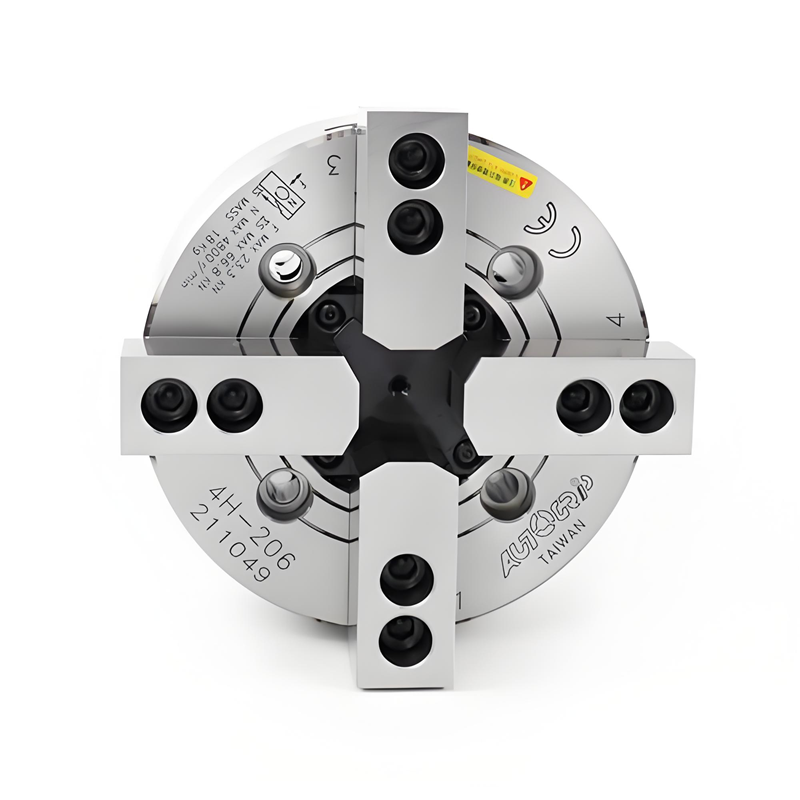
Mechanism: Four jaws move independently (Independent) or in pairs (Linked/2+2) via individual screws or
hydraulic/pneumatic pistons.
Strengths:
Maximum Flexibility: Can hold square, rectangular, oval, castings, forgings, and highly irregular shapes. Independent
jaws allow gripping off-center.
High Precision Adjustment: Each jaw (or pair) can be adjusted independently for exceptional concentricity or
to position a feature precisely.
Strong Grip Force:Typically offers very high clamping force, suitable for heavy cuts on large or irregular workpieces.
Limitations:
Slower Setup: Manually indicating and adjusting jaws for concentricity or position takes significantly longer than
a 3-jaw or collet.
Operator Skill: Requires more skill to set up accurately.
Cost: Generally more expensive than 3-jaw chucks.
Best For: Low-to-medium volume production of complex shapes, one-off prototypes, repairs, jobs requiring extreme
concentricity adjustment, holding large or heavy irregular parts.
4. The Hydraulic Expansion Chuck
Mechanism: Uses hydraulic pressure to expand an inner membrane or segments outward against the ID of a bore.
Strengths:
Excellent Concentricity: Provides very high gripping accuracy and repeatability on internal diameters.
Full Access: Allows complete machining access to the entire outer diameter and face of the part.
Minimal Distortion:Uniform expansion minimizes distortion of thin-walled parts.
Limitations:
ID Grip Only:Can only hold parts by their internal diameter.
Bore Requirement:Requires a finished or semi-finished bore of consistent size and quality.
Limited Size Range:Each chuck is designed for a specific bore size range.
Best For: Machining the external surfaces and faces of parts with a precision bore (e.g., bearings, rings, cylinders),
finishing thin-walled components.
Key Selection Factors:
1. Workpiece Geometry & Material:Shape (round, hex, square, irregular), size, wall thickness (delicate?), material type
(hardness, tendency to distort).
2. Precision Requirements: Required runout tolerance for concentricity. Collets excel here; 4-jaw allows adjustment;
3-jaw is generally adequate for less critical work.
3. Production Volume:High volume favors fast setups (3-jaw, collet w/ quick-change). Low volume/one-offs favor
flexibility (4-jaw).
4. Setup Time:How critical is minimizing non-cutting time? 3-jaw and collets are fastest.
5. Gripping Surfaces:Will you grip the OD or the ID? This immediately narrows choices (e.g., expansion chucks for ID).
6. Required Grip Force: Heavy roughing needs high force (3-jaw, 4-jaw). Finishing delicate parts needs controlled force
(collet, expansion).
7. Machining Operations:Will there be heavy interrupted cuts (needs strong grip)? Is full part access needed (favors
expansion chucks)?
There is no single "best" CNC lathe chuck. The optimal choice is a calculated decision based on the specific demands of
the workpiece, the required precision, production volume, and operational efficiency goals. Understanding the core
strengths and weaknesses of the 3-jaw power chuck, the precision collet chuck, the versatile 4-jaw chuck, and the
specialized hydraulic expansion chuck empowers machinists and programmers to select the gripping solution that
maximizes productivity, quality, and cost-effectiveness for every turning job. Investing time in selecting the right chuck
pays dividends throughout the machining process.